case file COV-001Contested public events · Scientific and intelligence disputelast update 2026-08-26
The Origins of SARS-CoV-2
What event initiated sustained human transmission of SARS-CoV-2 in Wuhan in late 2019 — and why does the evidence that would settle it sit with a single custodian?
ContradictedDeliberate engineering and release as a weapon
Provisionally supportedEarly public scientific certainty exceeded contemporaneous private belief
why this priorityTwo of the highest-yield tests — an adversarial preregistered reanalysis of the lineage question and an independent reproduction of the geographic signal — need no one's permission and run on already-public data. The rest are disclosure requests whose cost is diplomatic rather than scientific.
AI-generated editorial artwork
What is claimed
The zoonotic account claims spillover from the live-wildlife trade in roughly November–December 2019, possibly more than once. The research-related account claims a field, laboratory, or engineered-construct exposure, in ascending order of specificity and descending order of support. Two further claims sit underneath and are contested on their own terms: whether the early scientific consensus for zoonosis was reached by ordinary data-driven deliberation, and whether officials and funded scientists steered the early narrative. This case grades the evidence disputes. It does not grade anyone's culpability, honesty, or intent.
Where the disagreement lives
Not over whether the market was the early epicenter — the geographic concentration of the earliest known cases is the sturdiest finding here, and both sides largely accept it. The live disputes sit one rung up. First, epicenter versus origin: the market was closed, cleared, and disinfected before systematic sampling began, so environmental RNA cannot say whether an infected animal, a vendor, or a customer deposited it. Second, one introduction or two: the double-spillover inference is model-dependent and rests on early sequence data that is partly unpublished. Third, the two absences — no infected intermediate animal after the largest such search on record, and no laboratory anywhere known to have held a progenitor. Each side reads the other's absence as telling and its own as merely hard. What makes the asymmetry decidable in principle but not in practice is custodianship: the early patient sequences, the wildlife supply-chain records, the laboratory inventories, and the worker health files are all held in one country and have not been produced.
What would settle it
Specific documents and datasets, not further argument. On the zoonotic side: trader and farm records for the market's wildlife vendors, archived 2019 animal tissues and sera, and the raw market metagenomic reads with complete stall metadata — a pre-outbreak animal carrying the virus or a basal near-progenitor would be direct evidence of the transmission chain. On the research-related side: the laboratory sample database that went offline in September 2019, with raw sequence files and freezer inventories, and de-identified 2019 occupational-health records with stored sera — a timestamped pre-pandemic virus above roughly 99% identity, or a verified 2019 seroconversion, would transform the hypothesis, while a complete independently audited inventory lacking one would substantially weaken it. Common to both: the several hundred early-patient sequences the WHO says remain unavailable. Most of that list is an act of political will rather than a research program. The exception, and the best value for money in the case, is a preregistered adversarial reanalysis of the early-lineage question — proponents and critics fixing methods before unblinding, on data that is already public.
Provisionally supported
Current assessment
contested by independent models
Three seats (Grok, Kimi, Opus) argue that the house verdict is internally inconsistent, and they are right. The draft concedes that market-associated zoonosis is the only hypothesis family with affirmative public evidence and that this is "not matched on the other side," then labels the case unresolved — a word that in this vocabulary means the record cannot order the alternatives at all. It can order them, weakly. COV-C001, COV-C005 and COV-C006 place the earliest recognised cluster, 87.5% of interior environmental positives, and mitochondrial DNA of susceptible mammals in the same few hundred square metres; COV-C002 supplies the one observation ascertainment bias does not naturally generate; COV-C010, even after its fourteenfold demotion, still leans toward more than one introduction. That is limited, largely unreplicated, single-custodian-dataset support for one explanation and nothing affirmative for the other — the textbook shape of provisionally_supported. I therefore move.
Gemini holds with the house at unresolved on the ground of two symmetrical absences hostage to non-disclosure. That is correct about the keystone claims and I preserve it there: COV-C008 (an infected supply-chain animal) and COV-C017 (DEFUSE-like work actually performed) both stay unresolved, and COV-C015 records that SAGO could not assess the laboratory route at all. But unresolved-at-the-keystone does not force unresolved-at-the-family. The absence of an infected animal is substantially manufactured by not sampling the candidate species before clearance and disinfection (COV-E006, COV-E007, COV-C004); the absence of a laboratory holding sits beside no progenitor, no incident, no seroconversion (COV-E019). Both are non-diagnostic; only one sits inside a convergent affirmative pattern.
GPT-5.1's well_supported does not compel. Well_supported implies replication and independent lines. Here the geography, environmental, metagenomic and lineage analyses run on one Chinese CDC dataset through overlapping author teams (COV-E004, COV-E005, COV-E010) — three analytic layers, not three confirmations. COV-C002 is a single p = 0.029 result on an unaudited line list with an unresolved published exchange; COV-C010 lost most of its support to a code error (COV-E011). Two of the three genuinely discriminating items are the two least load-tested. Strip them and the record supports only "the market amplified an outbreak," which both families accommodate. Institutional-integrity findings (COV-E026) remain off the origin verdict entirely.
Contested: 2 of 5 models dispute the case verdict. The disagreement is shown below, not resolved by hiding it.
overview · marked sentences open the exact claim
The question is not "did COVID come from a lab." That framing has consumed six years of argument and cannot be answered, because it bundles together several distinct claims that behave very differently under evidence. The sharper question, and the one this case grades, is narrower: what event initiated sustained human transmission of SARS-CoV-2 in Wuhan in late 2019?
Asked that way, the dispute organizes itself into three layers that public argument constantly merges. The first is biological: what infected the first humans. The second is capability: what laboratories could do, or planned to do. The third is institutional: how officials and scientists handled records, disclosure, and candor. Misconduct on the third layer licenses re-weighting testimony. It is not origin evidence. This page keeps them apart as visible structure, because collapsing them is how both camps have persuaded themselves they were winning.
The observation that carries the statistical weight is subtler. Among the earliest cases, those with no reported market exposure lived closer to the market than the people who worked thereC002. That is the finding hardest for ascertainment bias to explain: if early cases were found because investigators looked around the market, the unlinked cases should not be the ones living nearest it. It is also a single spatial-statistical result at p = 0.029, on a case set whose completeness is disputed, never independently reproduced, and contested in a published exchange that remains unresolved. Load-bearing and not yet load-tested.
▸ claims behind this paragraph (1)▾ claims behind this paragraph
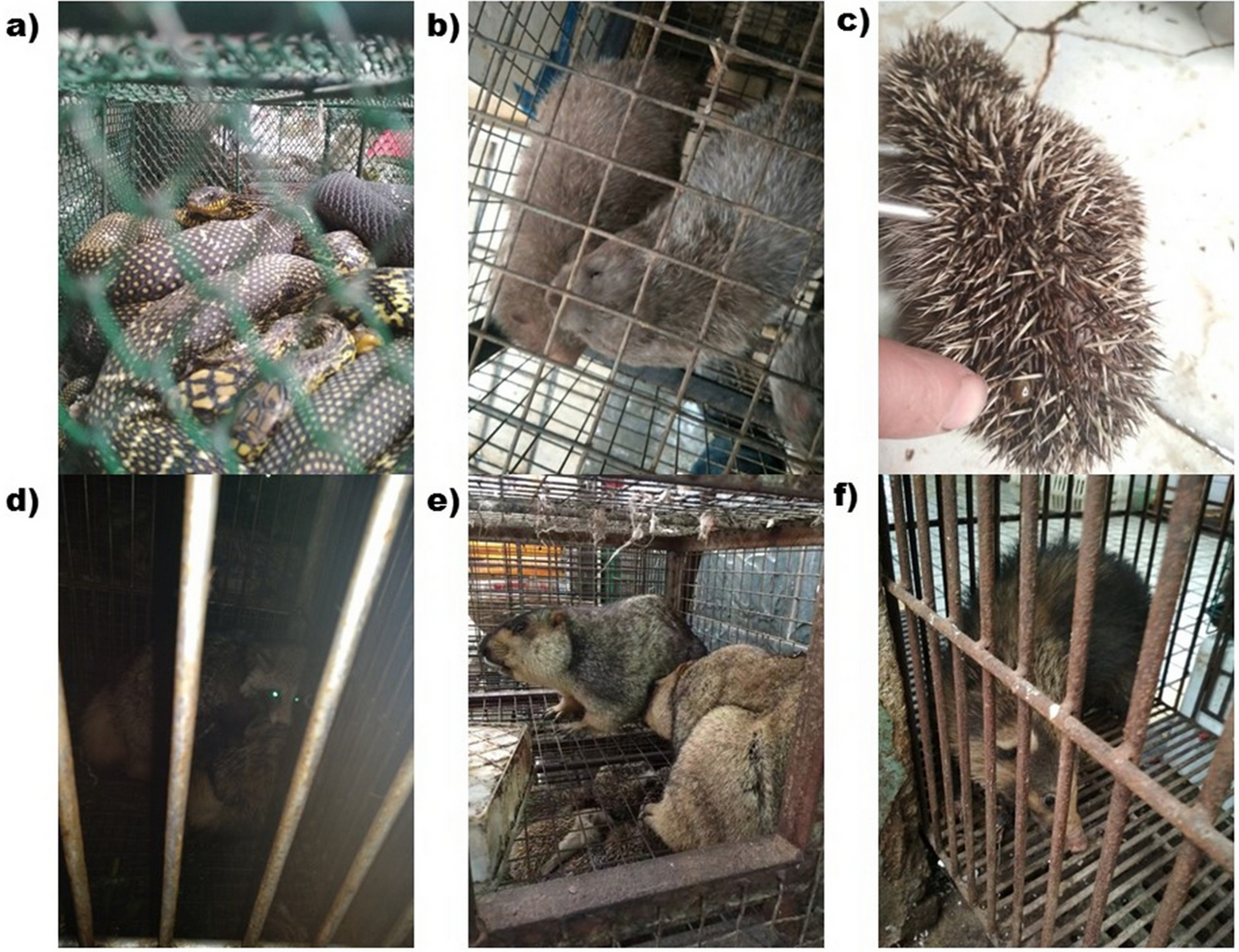
plate I · figure from a peer-reviewed survey — duotone applied in display; original unmodified
Live mammals and reptiles photographed on sale at the Huanan market before the pandemic, from a peer-reviewed survey of Wuhan wet markets whose fieldwork ran from May 2017 to November 2019. The panels are labelled by the authors as (a) king rat snake, (b) Chinese bamboo rat, (c) Amur hedgehog with a tick indicated, (d) raccoon dog, (e) marmot above a cage of hedgehogs, and (f) hog badger. Four of these species — raccoon dog, bamboo rat, hedgehog and marmot — are among those whose genetic material was later recovered from virus-positive samples at the market. What the photographs establish is presence and confinement of susceptible species at that site, and nothing about infection.
Xiao Xiao, Chris Newman, Christina D. Buesching, David W. Macdonald and Zhao-Min Zhou · Between May 2017 and November 2019; published 7 June 2021 · source · CC BY 4.0
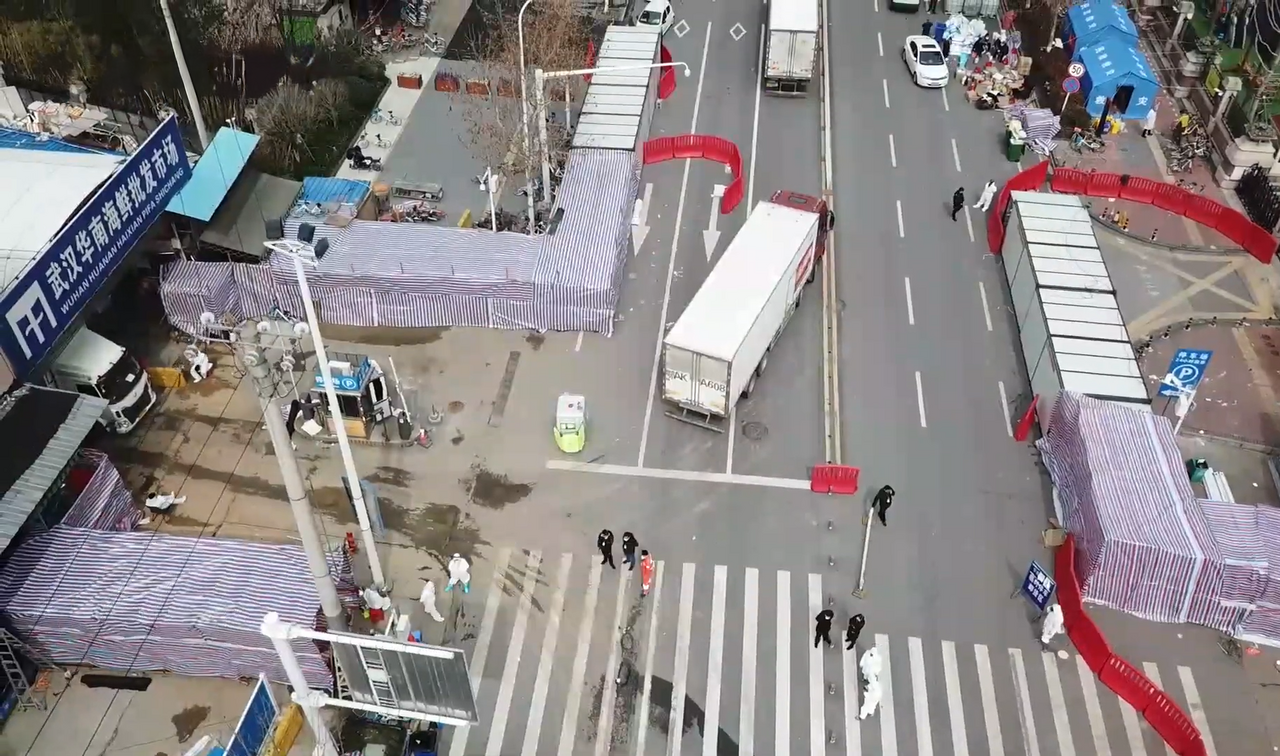
plate II · photograph — duotone applied in display; original unmodified
The Huanan market frontage sealed behind barriers, with personnel in protective suits present, in footage published in early March 2020 — after the market's closure on 1 January and during the disinfection period. This is the condition under which the environmental sampling that produced the case's market evidence was carried out: the animals gone, the stalls cleared, surfaces repeatedly disinfected. It is the single most useful thing to hold in mind when weighing what a positive surface swab can and cannot establish.
Chinanews.com / China News Service · 2020-03-04 · source · CC BY 3.0
The two absences
Here is where this case's shape becomes visible. Two symmetrical holes sit at the center of the record, and each side treats the other's as damning and its own as merely difficult.
No animal has ever been shown to carry the virus or a close progenitorC007 — not at the market, not in its supply chain, not in China's subsequent testing. That is the zoonotic case's missing keystone, and it is weaker evidence than it appears for a specific reason: the animals that were tested were unsold stock, freezer contents, and strays. The reanalysis of that very dataset states that no raccoon dogs or civets on sale at the market were ever sampled or tested, and no serology was taken from animals or handlers. An absence produced by not testing the relevant species tells you little. WHO's own assessment says the limited range of species tested limits any definitive conclusion, and adds a pointed observation: it finds it unlikely that there have been no human-to-animal infections anywhere in China since the pandemic began, given how many susceptible species are present — which is scepticism about the completeness of the very negative results the zoonotic case is criticized with.
▸ claims behind this paragraph (1)▾ claims behind this paragraph
Its mirror: no laboratory is publicly known to have held the virus or a sufficiently close progenitorC013, and the intelligence community reports no indication that the institute's pre-pandemic research involved either. Both absences are hostage to records that have never been produced. "Not found" and "not inspectable" are doing similar work on both sides, and this page treats them alike.
▸ claims behind this paragraph (1)▾ claims behind this paragraph
The claim is graded `mixed`, and the reason is a correction that most citation of this literature still ignores. In October 2023 an erratum reported that a code error had overestimated the Bayes factors favoring multiple introductions. They fell from 61.6 and 60.0 to 4.3 and 4.2 — roughly fourteenfold — and the authors' own wording moved from "strong" to "substantial" support. That is a real demotion of the case's most diagnostic quantitative claim, and it belongs in plain view.
It is also routinely overstated in the other direction. The erratum says the corrected analysis "still favors the multiple introduction scenario," and the remaining value sits in the positive-evidence band. Characterizations that the correction reduced the finding to negligible are not supported by the document. Both numbers appear on this page so readers can judge the size of the change themselves.
One further correction matters here. This site's own research brief attributed to WHO a sentence contrasting the two-lineage pattern with the single introduction a laboratory leak would produce. No such sentence exists in the report. WHO reports the finding and attributes the judgment to the original authors. The contrast is a reasonable inference — it is simply our inference, and it is labeled that way.
The genome, which settles less than either camp wants
The furin cleavage site is absent from SARS-CoV-2's closest sampled relativesC011. True, and the best calibration point in the case: a highly credible observation with almost no discriminating power, because both hypothesis families accommodate it. The stronger formulation in circulation — that such a site is "not found in nature" — is contradicted; furin motifs occur across other coronavirus lineages, and WHO notes the feature had been identified in nature before.
▸ claims behind this paragraph (1)▾ claims behind this paragraph
No feature accepted as diagnostic of engineering has been foundC012, and almost all intelligence elements assessed the virus was not engineered, all that it was not a bioweapon. But WHO's sentence on this deserves to be read whole, because its second half is almost always dropped: the genomic features "are readily explained by natural evolution and provide no support to theories of a man-made origin. However, the latter is also not refuted by biological data." No support, and no refutation. Seamless methods leave no required scar, and the intelligence reporting itself notes the institute possessed such methods — so this finding weighs against a deliberately engineered construct, and barely at all against a natural virus escaping a laboratory.
▸ claims behind this paragraph (1)▾ claims behind this paragraph
plate III · photograph — duotone applied in display; original unmodified
The main entrance of the Wuhan Institute of Virology, photographed in December 2016 — three years before the outbreak and unconnected to it. The institute is where the research-capability layer of this case sits: the coronavirus collection, the biosafety practice the intelligence reporting describes, and the sample database that went offline in September 2019. A photograph of a gate establishes none of that; it is included so the reader can place the institution, not as evidence about what happened inside it.
That is genuinely more than the zoonotic account predicts, and considerably less than a mechanism. So whether such experiments were actually performedC017 is stated as its own claim, unresolved, because this is precisely where the argument gets smuggled from document to deed. No public record shows the work was done; no published precursor sequence connects the contemplated constructs to this virus. Against that, the same intelligence report notes the institute possessed cloning methods that leave no trace, and the records that would settle it — biosafety approvals, project files, synthesis orders, raw reads — have never been produced.
▸ claims behind this paragraph (1)▾ claims behind this paragraph
A detail here illustrates why full quotation matters. A margin comment in the draft records, usually excerpted from "Once we get the funds" onward, reads in full: "Ralph, Zhengli. If we win this contract, I do not propose that all of this work will necessarily be conducted by Ralph, but I do want to stress the US side of this proposal so that DARPA are comfortable with our team. Once we get the funds, we can then allocate who does what exact work, and I believe that a lot of these assays can be done in Wuhan as well…" Truncated, it reads as concealment of a settled plan. Whole, it is a presentational judgment about how to pitch a team — with an acknowledged intention to shift assay work to Wuhan afterwards. One sentence separates those readings.
Work with SARS-like coronaviruses was being conducted at biosafety level 2C018, and the intelligence community assessed that some researchers probably did not use adequate precautions at least some of the time. That establishes opportunity — which the field, laboratory, and engineered scenarios share equally, and which is also consistent with nothing having happened.
▸ claims behind this paragraph (1)▾ claims behind this paragraph
One correction belongs here, because the claim it concerns is among the most-repeated in the entire debate. The proposition that a congressional report concluded the furin cleavage site is "not found in nature" does not existC011. The phrase appears only in a press release, describing an unnamed "biological characteristic"; it is absent from all 520 pages of the report, whose own argument on the point is a quotation of a newspaper columnist rather than a committee finding. And the underlying claim is contradicted regardless of authorship, since furin motifs occur across other coronavirus lineages.
▸ claims behind this paragraph (1)▾ claims behind this paragraph
The intelligence community never convergedC014: several elements favored natural exposure, two a laboratory-associated incident, others could not decide — every position at low confidence except one at moderate. A later agency shift toward a research-related origin was reported as resting on a review of existing information rather than new intelligence, and its own statement adds that both scenarios remain plausible. The correct reading belongs to neither camp: analysts with privileged access stayed split, which indicates nobody held decisive material.
▸ claims behind this paragraph (1)▾ claims behind this paragraph
And WHO's 2025 assessment says two things that must be read togetherC015. The weight of the evidence reviewed by SAGO suggests zoonotic spillover — that qualifier is in the original and is usually elided. And it could not assess a laboratory origin at all, because the necessary information was not provided. The report states plainly that it had no access to original raw data from any source. Requested information was withheld by three governments, not one: China, Germany, and the United States. A page treating this report as settling the question would silently inherit its dependence on a partly withheld evidence base.
▸ claims behind this paragraph (1)▾ claims behind this paragraph
The uncomfortable pattern in the research agenda is that the highest-yield tests are acts of political will rather than research programs: the withheld early sequences, the laboratory inventories, the occupational-health records, the supply-chain traceback whose window has largely closed. The custodian of most of that material has declared its origins investigation complete.
But two decisive tests need nobody's permission and run on data that is already public. A preregistered adversarial reanalysis of the introductions question, with proponents and critics fixing methods before unblinding. And independent reproduction of the geographic signal from released code and raw inputs, under alternative spatial models. If this case has a research agenda worth funding, it starts there — and the fact that neither has been done, six years in, is itself part of the record.
The honest summary is short. Zoonotic spillover at or near the market is the best-supported hypothesis on the accessible evidence, and its transmission chain is unclosed. A research-related origin is neither established nor excluded, and the records that would decide it have not been produced. Anyone claiming science has proven either answer is describing a record that does not exist.
the argument ladder
evidence for a lower rung does not automatically climb
Attribution
Was it actually done? The claims the thesis stands or falls on.
The strongest records on each side, structurally symmetric. Every record separates what the source states from what we infer.
strongest supporting
▲Supports· strongCOV-E001
Early cases clustered around the market, including cases with no market link
what the source states
"We considered three categories of cases, which were all significantly closer to the Huanan market than expected: (i) all cases (median distance 4.28 km; P < 0.001), (ii) cases linked directly to the Huanan market (median distance 5.74 km; P < 0.001), and (iii) cases with no evidence of a direct link to the Huanan market (median distance 4.00 km; P < 0.001)." And, from the Discussion: "this group of cases resided significantly closer to the market than those who worked there, indicating that they had been exposed to the virus at or near the Huanan market. For market workers, the exposure risk was their place of work, not their residential locations, which were significantly farther afield than those cases not formally linked to the market."
what we infer
This is the observation that ascertainment bias has the hardest time explaining. If early cases were found because investigators looked around the market, the unlinked cases should not be the ones living nearest it. The comparison is significant at p = 0.029, which is a modest margin for a load-bearing result.
limitations
Rests on Chinese case ascertainment that has never been independently audited; the complete December 2019 line list has not been released.
Not independently reproduced; the code and raw geospatial data have not been re-run by a third party.
A published eLetter disputes the spatial result on distributional grounds and the authors replied identifying flaws in that critique; the exchange is unresolved.
Chinese CDC surveillance: 923 environmental samples, 74 positive, 87.5 percent of interior positives in the west zone
what the source states
"From 1 January 2020, after closure of the market, 923 samples were collected from the environment. From 18 January, 457 samples were collected from 18 species of animal … SARS-CoV-2 was detected in 74 (70 RT-qPCR and 4 Bowtie2) environmental samples, but none of the animal samples." On distribution: "Of the 64 SARS-CoV-2-positive samples collected inside the HSM, 87.5% (56/64) were collected in the West Zone of the market." On the sampling window: "The market was closed in the morning of 1 January 2020 … On the same day, in the early morning, the Chinese Center for Disease Control and Prevention … dispatched an epidemiological team." And on what was done to the site: "the outside surface of the rolling shutter doors of the stalls and the corridors were disinfected … throughout January and February 2020. The goods inside the stalls were completely cleared and disinfected until early March 2020."
what we infer
The custodian's own data independently corroborates the western-section concentration found by outside analysis, which is the strongest form of that finding. The same paper bounds what the sampling could show: the market was empty and being disinfected throughout the collection period.
limitations
Cite the 2024 version of record: the positive count was 73 in the 2023 accelerated preview and 74 after a note added in proof explaining the difference.
The paper's abstract dates animal sampling from 18 January while its Results describe both sample sets as collected from 1 January; the discrepancy is noted rather than resolved.
Produced by the custodian whose data-sharing is itself in dispute.
Susceptible-wildlife DNA in the positive samples — and the authors' own limitation
what the source states
From the published abstract: investigators "find increased SARS-CoV-2 positivity near and within a wildlife stall. We identify wildlife DNA in all SARS-CoV-2-positive samples from this stall, including species such as civets, bamboo rats, and raccoon dogs, previously identified as possible intermediate hosts." From the Results: "The five SARS-CoV-2-positive samples from wildlife stall A contained mtDNA from raccoon dogs, hoary bamboo rats, dogs … and European rabbits. Amur hedgehog and Malayan porcupine mtDNA was present in four samples … and one sample contained masked palm civet mtDNA." The authors then state the limitation directly: "Although either animal or human viral shedding is consistent with these data, only a zoonotic origin of SARS-CoV-2 directly predicts co-detection of SARS-CoV-2 and wildlife genetic material." And: "It is not possible to conclude which of these species may have been infected and/or introduced the virus to the market from these data alone."
what we infer
The strongest affirmative market evidence, and its limits are stated by the people who produced it rather than by critics. The asymmetry the authors identify is genuine and easy to miss: co-detection is what zoonosis specifically predicts, even though human shedding after a zoonotic event would produce the same pattern. Detection is uneven across species, which the flat species lists in circulation obscure.
limitations
A reanalysis of the same Chinese CDC environmental data underlying the surveillance paper, sharing authors with the market epicenter paper: one evidence stream, not an independent confirmation.
The authors note that a correlational analysis of this data cannot reliably show whether any particular species was infected.
The 2023 erratum: support for multiple introductions cut roughly fourteenfold
what the source states
"the frequency of simulated topologies matching phylogenetic structures arising from a single introduction was incorrectly reported because of an error in the code, which has been corrected. Correspondingly, the Bayes factors in favor of multiple introductions of severe acute respiratory syndrome coronavirus 2 (SARS-CoV-2) into the human population relative to a single introduction were overestimated. The text now represents the corrected Bayes factors and topology frequency (Fig. 2C), which still favors the multiple introduction scenario."
what we infer
A substantive correction to the case's most diagnostic quantitative claim, recorded as prominently as the finding it corrects. Comparing the two published versions gives the magnitude the erratum text omits: Bayes factors fell from 61.6 and 60.0 to 4.3 and 4.2, the authors' own wording moved from "strong" to "substantial" support, and the simulation frequency of the single-introduction topology rose from 0.5 to 3.1 percent. Both directions of overstatement are worth naming: the original figures should no longer be cited, and the characterization that the correction reduced the finding to negligible is contradicted by the erratum's own sentence that the corrected analysis still favors multiple introductions.
limitations
The erratum states no numbers; the magnitudes here come from comparing the two published versions of the parent paper.
Read via a dated archive snapshot because the repository deposit carries metadata only.
The 2023 assessment: no indication of a progenitor holding, and no engineering
what the source states
The 2023 declassified report states that the intelligence community has no indication that the institute's pre-pandemic research involved SARS-CoV-2 or a close progenitor virus, and no direct evidence of a specific research-related incident capable of causing the pandemic. It also records that almost all elements assess the virus was not genetically engineered and all assess it was not developed as a biological weapon.
what we infer
The single most load-bearing document in the case, and it is cited by both camps for different passages. Its exculpatory statements are recorded here with the same prominence as the biosafety findings it also contains, per the fairness rule. What it establishes is an absence of indication in the reporting available to the community — which is not the same as evidence of absence, and not the same as an audit.
limitations
A declassified summary whose underlying intelligence cannot be audited by any reader; the report places its own scope caveats on what it assessed.
One source doing a great deal of work in this case; records drawn from it share an independence group and must not be counted as separate confirmations.
The earliest reported case had no market link, per the first clinical series
what the source states
"By Jan 2, 2020, 41 admitted hospital patients had been identified as having laboratory-confirmed 2019-nCoV infection. … 27 (66%) of 41 patients had been exposed to Huanan seafood market." And: "The symptom onset date of the first patient identified was Dec 1, 2019. None of his family members developed fever or any respiratory symptoms. No epidemiological link was found between the first patient and later cases."
what we infer
The same paper carries evidence in both directions, which is why it is recorded once rather than split into a favorable half. Two-thirds of the earliest confirmed patients had direct market exposure — strong for the market's centrality — while the earliest case by onset had none, which is what an upstream or non-market index event predicts.
limitations
A single case's reported exposure history in an early clinical series is weak evidence about the outbreak's origin.
The identification of this patient as the earliest case, and the December 1 onset date, have been disputed in later reporting this case has not adjudicated.
steelmanned — the account the featured hypothesis must beat
A sarbecovirus circulating in bats, plausibly via an intermediate mammal host, entered the live-wildlife supply chain and reached Wuhan, where it crossed into humans at or immediately upstream of the Huanan market in roughly November–December 2019 — most likely more than once. This is not an argument from the absence of a laboratory smoking gun; it is the only hypothesis with multiple affirmative lines of public evidence, and they converge on the same few hundred square metres. The earliest known cases cluster around the market, and — the observation carrying the statistical weight — cases with no reported market link lived closer to it than cases who worked there, which is what exposure at the market predicts and what contact-tracing artifact does not. Positive environmental samples concentrate where live-mammal vendors operated; genetic material from experimentally susceptible species co-occurs with viral RNA at a wildlife stall; and those species have documented history as amplifiers in the earlier SARS outbreak, in the same country, through the same trade. The earliest viral diversity partitions into two lineages whose joint pattern is more easily explained by repeated introduction than by a single seeding event — easy under wildlife-trade spillover, awkward under one infected worker. The genome carries no accepted forensic signature of engineering. Its unpaid debts are real and should not be minimized: no infected source animal has ever been found, the upstream farm traceback was never completed, and the market's animals were gone before anyone sampled them. But a missing animal is a fact about what investigators were permitted to look for, not a positive case for any alternative.
Research agenda
The case does not end in a verdict; it ends in the studies that would move it. Curated from the public request for proposals. The program funds tests in either direction.
COV-R001Prize or grant · Desk
Preregistered adversarial reanalysis of the one-versus-two-introductions question
Convene proponents and critics of the multiple-introduction inference to fix methods, rooting choices, molecular-clock assumptions, and sequence-inclusion criteria in a public protocol BEFORE unblinding, then run the analysis once and publish whatever it returns. The dispute is currently conducted by each side selecting defensible analytic choices that favor its conclusion; a preregistered protocol removes that degree of freedom.
expected information gain
The best value for money in the case, and it needs nobody's permission: the data is already public. It would remove method-shopping suspicion from the zoonotic case's strongest quantitative pillar — a pillar whose published support was already cut roughly fourteenfold by one code correction, which is precisely why an adversarial protocol is warranted.
Independent reproduction of the early-case geographic signal
Obtain release of the analysis code, raw geospatial inputs, case-definition history, ascertainment methodology, and negative sampling locations behind the early-case spatial result, and reproduce it under preregistered alternative spatial models and ascertainment corrections — including the specific critique published as an eLetter and the authors' reply.
expected information gain
High in both directions and the case's load-bearing observation. A signal robust to alternative models materially strengthens market spillover; collapse under reasonable corrections would remove the strongest thing the zoonotic case has. The margin on the key comparison is modest enough that this is a live question rather than a formality.
Release of the unpublished early-patient sequences and the December 2019 line list
Publication of the more than 500 early sequences WHO has formally requested, with verified collection dates and metadata, together with the complete December 2019 Wuhan case line list and its case-definition history.
expected information gain
Directly tests one-versus-two introductions and pre-December circulation, and supplies the input the adversarial reanalysis most needs. WHO has requested it publicly and not received it, which makes this a question of political will rather than research capacity.
Release of the Wuhan Institute of Virology sample database and inventories
Disclosure of the offline sample database with raw sequence files, freezer inventories, sample barcodes, and server logs, subject to independent audit rather than summary description.
expected information gain
High and genuinely bidirectional — the rare test that could substantially settle the question either way. A timestamped pre-pandemic virus above roughly 99 percent identity would transform the research-related hypothesis; a complete, independently audited inventory containing no such virus would substantially weaken it. At present the intelligence community reports no indication either way, which is not the same as an audit.
Wildlife supply-chain traceback with serology on 2019 stock
Obtain farm and trader records for the market's wildlife vendors, test archived animal tissues and sera from 2019 where any survive, and take serology from supply-chain workers — the traceback WHO's advisory group has repeatedly named as a priority and which was never completed.
expected information gain
Decisive if an infected animal is found and largely inconclusive otherwise, since the relevant stock is mostly gone. Time has degraded this test badly, which is itself part of the record: the window was open in 2020 and the sampling that occurred did not cover the candidate species.
Independent audit of laboratory records and 2019 occupational-health files
Independent examination of experiment logs, sample inventories, biosafety and biosecurity protocols, and de-identified 2019 staff health records with any stored sera — the three categories WHO requested and did not receive.
expected information gain
The only route to confirming or excluding a laboratory-acquired infection. A verified 2019 seroconversion would be among the strongest possible research-origin evidence; a clean audited record would be the strongest exculpatory evidence available, and the institute has an interest in producing it that this case notes rather than assumes.
Declassification of the analytic record behind the divergent agency conclusions
Release of source summaries, analyst drafts, dissent memoranda, source-reliability ratings, confidence rationales, and draft-to-final change histories behind the intelligence assessments — enough to determine whether the divergence reflects different evidence, different weighting, or process problems.
expected information gain
Moderate on the origin and high on the meta-question of why analysts with privileged access split. It is also the only way to evaluate allegations that analytic judgments were altered, which currently rest on characterizations rather than on documents any reader can inspect.
Sustained field sampling in bats and candidate intermediate hosts across Southeast Asia and southern China, with sequencing aimed specifically at relatives carrying a polybasic furin cleavage site.
expected information gain
A natural sarbecovirus carrying a furin cleavage site would neutralize the feature's uniqueness argument outright — the single cleanest resolution available to that dispute. Continued absence slowly strengthens it. Genuinely fundable, and it accrues value regardless of the origin question.
Reconsideration draft: the case verdict moves from unresolved to provisionally_supported, and COV-C010 from mixed to weakly_supported.
Two independent blind panels had disputed the unresolved roll-up — three of five, then four of five — while splitting on none of the eighteen claims. A panel that accepts the whole ladder and rejects only its summation is pointing at an internal inconsistency, and on engaging the dissents the house agreed: the draft had conceded a real evidential asymmetry between the hypothesis families and then labelled it "unresolved," a term this vocabulary reserves for a record that cannot order the alternatives. Market-associated zoonosis is now graded provisionally_supported; the research-related family remains unresolved rather than excluded. On COV-C010, "mixed" implied opposing evidence of comparable method, which does not exist — after the erratum the corrected analysis still points one way, weakly.
Two dissents did NOT move the house, and both are recorded because refusing an argument is as much a judgment as accepting one. The well_supported reading was declined: the affirmative lines are three analytic layers over one Chinese CDC dataset with overlapping authors, and the two most discriminating items are the two least load-tested. The hold-at-unresolved reading was declined at the family level, but its core point is preserved where it belongs — at the keystone claims COV-C008 and COV-C017, in the COV-C015 grading, and in the record that three governments withheld requested material, not one.
Standing after the change is CONTESTED, not ratified, and this is the mechanism working rather than failing. A reconsideration is the one deliberately non-blind draft in the pipeline, so the checks whose dissents it answered can never ratify it; a fresh blind panel was run, and it now splits three to two with the two dissenters disagreeing in OPPOSITE directions — one holding the case weaker than the draft, one stronger. The draft sits at the panel's median with objection on both flanks, which is the honest resting place for a genuine standoff and is displayed as such rather than re-litigated toward a clean badge.
Why: Founder direction to run the reconciliation after two panels disputed the roll-up. The house engaged every dissent on the record and moved only where the argument compelled.
Added three plates to the overview article: three photographs — live susceptible mammals documented on sale at the market before the pandemic, the market sealed and being disinfected after closure, and the entrance of the research institute. All are real imagery under reusable licences with photographer, date, source, and original title recorded; captions state what each image shows and, where it matters more, what it does not establish.
Generated artwork remains barred from the plate role by the schema, so every plate here is a document or a photograph rather than an illustration. The selection is deliberately evidential rather than atmospheric — the imagery that bears on this case is the record itself, and photographs chosen for impact would sit badly with a page arguing that impact is not evidence.
Why: Founder direction to make the articles more readable. Classified as content, not housekeeping, on an arbiter seat's objection. The engine's own display heuristic would treat an images.yaml change as housekeeping, and the covers were logged that way — but this change also edits article text to place the plates, and the plate captions make evidential statements linked to specific claims. Where the classification is genuinely arguable, AGENTS.md §3.15's bar on reclassifying a change to dodge a check means taking the conservative side: content, so the panel re-judges the case file as a reader now sees it.
Confirmation pass on the metagenomics evidence record (COV-E005), closing the weakest provenance link in this case. The version of record was reached from two Internet Archive captures of the publisher's own full-text page after sixteen other routes failed, and the three body-text quotations were checked against it. Two are verbatim. The third carried one pre-copyedit word — the record quoted "While either animal or human viral shedding is consistent with these data", where the published text reads "Although" — and has been corrected. The locator now names the published sections rather than the manuscript, and the author-manuscript caveat is removed because the pass it asked for has been done.
The caveat was deliberately not lifted on its own: removing it while leaving the pre-copyedit wording in place would have converted an honestly flagged manuscript quotation into an unflagged misquotation of the version of record, which is worse than the state it replaced.
Also established and recorded: the public repository deposit for this paper is the accepted author manuscript, not the version of record, and the paper is not open-access under a reuse licence. Verification stays ai_verified — AI-performed citation checking is never promoted, and no copy is held in a project library.
Why: Founder direction to complete the open items from the case launch. The remaining limitations on the record — shared data and authorship with the companion papers, and the authors' own statement that their data cannot identify the infected species — are untouched by this pass; the second is strengthened, since it is now confirmed verbatim in the published text.
Case retitled to name its subject directly rather than its conclusion. The previous titles were evocative but each asserted the case's own finding in the most prominent position on the page, before a reader reached any graded claim or source — a conclusion presented without the evidence, label, or uncertainty that every other assertion on the site has to carry. The clearest instance was this site's first case, whose title asserted the single-shot mechanism that the case exists to grade and does not grade as established.
Titles now name the event; subtitles continue to carry the specific question, and findings stay where they belong — in claims that are graded, sourced, and revisable.
Why: Founder direction, 2026-08-26. Applied to all three cases together rather than only the new ones, since leaving one conclusion-asserting title would be incoherent.
Cover artwork added: one AI-generated editorial illustration in the house style (style-e1), stamped with prompt, model, style version, and generation runId. Two candidates were generated and one chosen; the unused candidate was deleted rather than kept. Generated imagery is confined to the cover role — the schema forbids it as a plate — so nothing a reader could mistake for the evidentiary record is synthetic. Neither case carries plates, deliberately: the imagery each would otherwise reach for either depicts contested subject matter or does not exist.
The cover takes the case's own finding as its subject rather than its events, which is what keeps it clear of the depiction rule. No building, aircraft, pathogen, map, person, or place appears in it.
Why: Founder direction to complete the open items from the case launch.
Case launched: 18 featured claims across six themes, an evidence ledger of 31 records, a source registry of 24 independently verified sources, and a research agenda of eight decisive tests. The case adopts a three-layer separation as visible structure — the biological origin question, the research-capability question, and the institutional-integrity question — so that misconduct findings on the third layer cannot silently feed a verdict on the first. Accordingly the accountability thread around named officials (the 2024 and 2026 hearings, the released private communications, the contempt proceedings) is deliberately out of this cut: on both research briefs' own assessment it produces no origin evidence, and grading it would mean grading people rather than evidence.
Every citation was verified against the primary document (or a dated archive snapshot where a publisher bot-walls automated clients) before entry, and the pass materially changed the content. The largest single correction concerns the errata: there are two, one per paper, and public argument routinely attaches the wrong characterization to each. The market-epicenter paper's 2024 erratum is a null data-file correction stating results were unchanged. The lineage paper's separate 2023 erratum is substantive — a code error had overestimated the Bayes factors favoring multiple introductions, which fell from 61.6 and 60.0 to 4.3 and 4.2, moving the authors' own wording from strong to substantial support. Both facts are recorded: the original figures should no longer be cited, and the claim that the correction reduced the finding to negligible is contradicted by the erratum's own text.
Two statements attributed to the WHO advisory group's 2025 assessment were rejected because they are not in the document. The word "surprising" appears nowhere in its 78 pages; the sentence usually quoted to that effect is about the implausibility of there having been no human-to-animal infections anywhere in China, not about the missing intermediate host at the market. And the report contains no sentence contrasting the two-lineage pattern with the single introduction a laboratory leak would produce — it reports the finding and attributes the judgment to the original authors, so this case records that contrast as its own editorial inference rather than as WHO's.
On the research-program side, the 2018 proposal's cleavage-site passage was confirmed verbatim at a specific page locator by two independent optical-character passes, and the agency's non-award was confirmed three ways including a negative check of federal award data. Two corrections came with it. The proposition that the congressional majority report concluded the furin cleavage site is "not found in nature" does not exist: the phrase occurs only in the accompanying press release, where it describes an unnamed "biological characteristic," and the report's own argument on the point is a quotation of a newspaper columnist rather than a committee finding — so the report and its press release are recorded here as two distinct sources. And the frequently excerpted draft margin comment is recorded in full, because the usual truncation removes the sentence stating its purpose and converts a presentational judgment into apparent concealment.
Further corrections: the Chinese CDC surveillance paper is a 2024 publication, not 2023, and its positive-sample count changed from 73 to 74 between versions; the Laotian bat-virus paper is 2022, resolving an uncertainty in the brief; requested information was withheld by three governments rather than one; the funding agency's origins statement was cited to a staging host that must never be used; and the negative animal results are far narrower than usually reported, because the candidate intermediate-host species were never sampled or tested at all.
All records carry ai_extracted provenance. Nothing has been human-reviewed, and no assessment has been ratified.
Why: Founder direction to import a first cut of the COVID-origins evidence disputes. Constructed from research briefs under casework/covid-origins with every citation re-verified at the primary source before entry; the briefs themselves, and the debate and advocacy material held alongside them, are cited nowhere.
living persons · corrections
Cases on this site may concern real, living, named people. Every person accused in any proceeding touched by this case is presumed innocent unless and until proved guilty in a court of law. This site grades evidence disputes — timelines, forensics, authenticity, chain of custody — never anyone's guilt, and assertions by prosecution, defense, or officials are labeled as assertions by their source.
To request a correction or the removal of material about you or someone you represent, open an issue on this site's repository or contact the founder directly. Such requests are processed before any other maintenance work.