Erebus
case file KRK-001Contested public events · Active criminal proceedinglast update 2026-08-26

The Killing of Charlie Kirk

Does the public evidentiary record of the September 10, 2025 killing of Charlie Kirk support the official single-shooter account — and where exactly does it stop being auditable?

MixedAI assessment · ratified by 3 of 4 independent modelsHigh research priority

by component — one word would mislead

  • Well supportedFatal mechanism (distant rifle shot)
  • UnresolvedPublic bullet-to-rifle identification
  • MixedPublic chain-of-custody completeness
  • Weakly supportedDevice-at-the-microphone alternative

why this priorityThe decisive disclosures (fragment reconciliation, autopsy package, native-media synchronization) are cheap relative to the public dispute they would settle, and the September 1, 2026 probable-cause hearing makes the record likely to move soon in one direction or the other.

Abstract technical diagram on a deep blue-black field: a single sharp vertical impulse resolving into one unbroken pale trace, surrounded by many fainter parallel traces that step, break, and fade into dotted gaps marked with small crosses.
AI-generated editorial artwork

What is claimed

Critics of the official account claim, in ascending order of strength: that the public record is materially incomplete and unauditable (fragment accounting, autopsy detail, native media); that specific evidence chains were compromised or manipulated; that Robinson had assistance or the event had foreknowledge; and, on the strongest versions, that the fatal mechanism was not a distant rifle shot at all but a device at the microphone, with institutional concealment afterwards. The featured question is not "who did it" — it is which of these evidentiary challenges survive contact with the primary record.

Where the disagreement lives

Not over whether Kirk died of neck trauma at the event, nor over whether a figure fled the Losee Center roof — both are strongly documented. The live disputes sit one rung up, in provenance and completeness: the ATF examiner could neither match nor exclude the recovered rifle against the autopsy fragments; seven photographed fragments against four examined remain unreconciled publicly; the complete autopsy package has not been released in auditable form; the event contractor's original camera media chain is not publicly established; and the site was altered within days. Whether those gaps are ordinary process or something worse is exactly what the record does not yet say.

What would settle it

Disclosure and independent testing, not commentary: a fragment-by-fragment reconciliation of all seven documented fragments; the complete autopsy and radiology package reviewed by independent forensic pathologists; a blind, native-file synchronization study of every camera and audio source ordering shot, wound, and clothing motion frame-accurately; a blind independent re-examination of the ballistics with 3-D surface metrology; and an activity-level DNA review. Each is specified in the research agenda; most are desk- or lab-scale.

Mixed

Current assessment

ratified by independent models · 2026-08-26

The record still splits into three strata, and the new material sharpens rather than reverses the split. The scene layer holds: a rooftop actor (KRK-E001, KRK-E002, KRK-E003), a recovered rifle along the escape route, and a medical classification of gunshot homicide entered through the hearing (KRK-E005). The prosecution's association layer — DNA (KRK-E013) and attributed statements (KRK-E015) — is substantial as presented but publicly untested at the authentication level, and the ballistic link that would individualize the rifle does not exist in public: the sworn result is inconclusive in both directions (KRK-E007, KRK-E008), and seven photographed fragments against four examined (KRK-E009) remain unreconciled. The challenge layer is where the new evidence bites. The auditability critique (KRK-C019) gains, not loses, force: KRK-E045 documents surveillance footage around Robinson's surrender allowed to auto-delete and never shared, and KRK-E046 records the former NCTC director stating on the record that foreign-nexus work was halted. But the grand-attribution claims fall further. KRK-E057 and KRK-E058 relocate the paving question from speed (unremarkable against comparable venues) to authorization sequence, deflating the concealment inference in KRK-C017 while keeping KRK-C013's narrow factual core intact. KRK-E042 shows the device theory was public on September 20, three weeks before the AES explosion, which removes the reactive-destruction timing at the heart of KRK-C025, and KRK-E041's 100 citations supply the mundane alternative. KRK-E054 shows the screwdriver evidence was presented under oath, so it was not abandoned. Sensitivity: the single record whose removal would matter most is KRK-E009, the fragment discrepancy. Without it, the auditability case loses its most concrete, sworn defect. The verdict survives — KRK-C019 would still be contradicted on the unreleased autopsy package (KRK-E006), the unresolved native-media inventory (KRK-E018, KRK-E021), and KRK-E045 — but the case would rest on absences rather than on one specific, quantified gap. The proceeding is active, the defendant is presumed innocent, and nothing here grades guilt.

run: 2026-08-26-auto-uyoqmodel: anthropic/claude-opus-5 (scheduled maintenance run)prompt: erebus-assess-v2-autodate: 2026-08-26

overview · marked sentences open the exact claim

On September 10, 2025, at 12:23 in the afternoon, Charlie Kirk was answering a student's question in a courtyard at Utah Valley University when a single shot killed him in front of roughly three thousand people and a half-dozen cameras. The State of Utah has charged Tyler Robinson, then twenty-two, with aggravated murder and says it will seek the death penalty. He has not entered a plea, no jury has heard the case, and he is presumed innocent — a sentence that belongs in the second paragraph of this article and not the footnotes, because everything else on this page must be read through it.

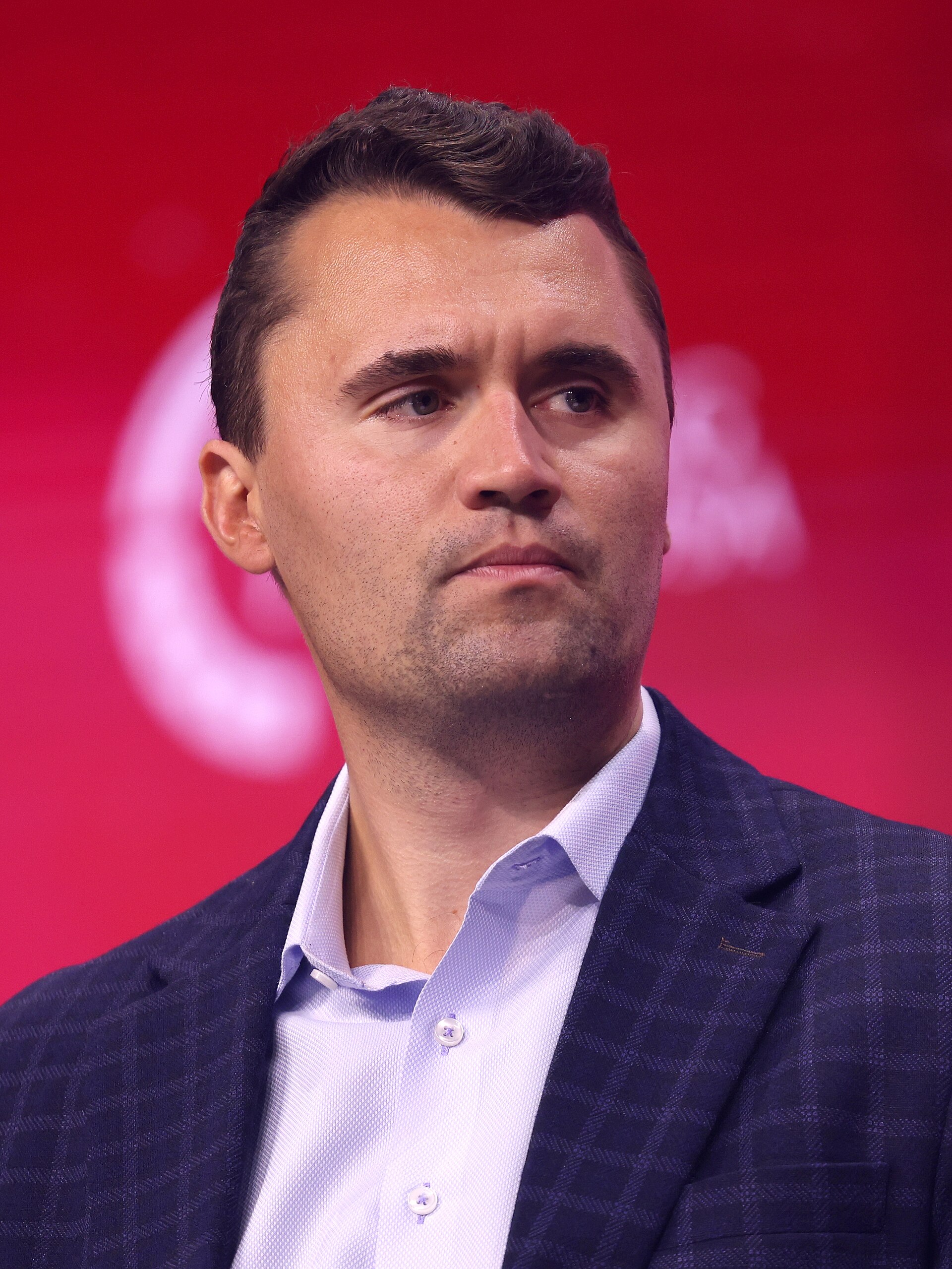
Charlie Kirk, in a dark checked blazer and open-collared shirt, looking off-camera against a red backdrop at a public event.

plate I · photograph — duotone applied in display; original unmodified

Charlie Kirk at a Turning Point USA event in Tampa, Florida, in July 2025 — two months before the Utah Valley University event at which he was killed.

Gage Skidmore · 2025-07-13 · source · CC BY-SA 4.0

This case does not ask who killed Charlie Kirk. That is a question for a courtroom, and no claim on this page grades it. What this case maps is the record: what the public evidence actually contains, where it is strong, where it stops, and which of the disputes swirling around it are real, manufactured, or simply unresolved. The killing of a political figure, on camera, during an active culture war, has produced an evidentiary argument conducted almost entirely in summaries of summaries. The method here is the opposite: every consequential sentence below is pinned to a claim you can open, every claim to evidence, every record to a source that was independently verified before it entered this file.

What is actually established

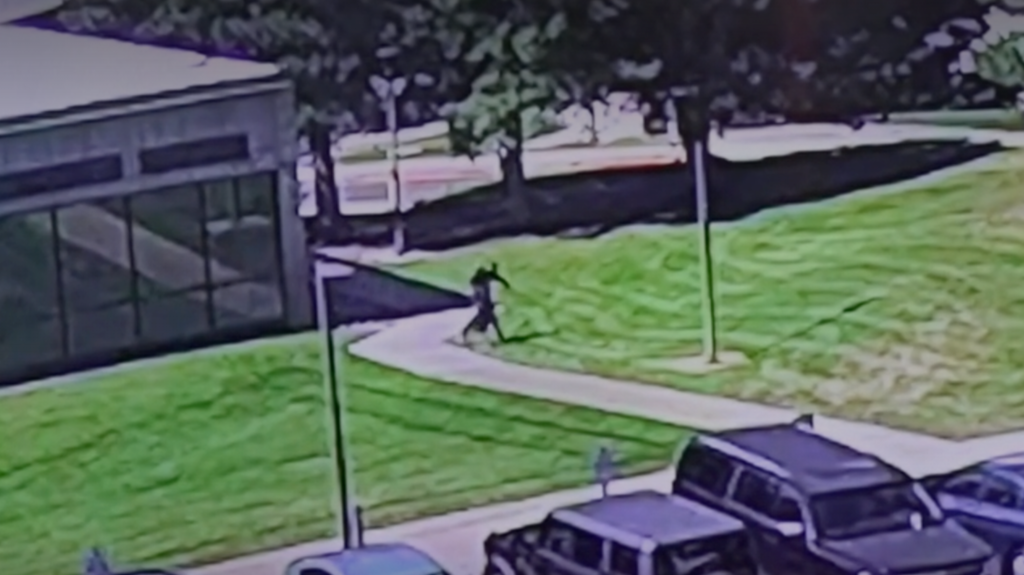
Grainy elevated surveillance frame: a distant, unidentifiable figure runs along a curved path across a campus lawn beside a glass-walled building, with parked cars in the foreground.

plate II · surveillance video frame — duotone applied in display; original unmodified

Frame from campus surveillance video released by the FBI on September 11, 2025: a figure runs across a lawn beside a campus building. The FBI describes the subject as the person of interest who descended from the Losee Center roof after the shot; the figure in the frame is not identifiable from the image itself.

CCTV (FBI release) · 2025-09-12 · source · Public domain

The medical record, as far as it goes, is equally direct: the medical examiner's report classifies the death as a homicide caused by a gunshot wound to the neck, with projectile fragments recovered at autopsyC006. And the prosecution's association case is substantial: DNA evidence presented at the preliminary hearing links Robinson to the rifle and related itemsC008, with statistics the state's witnesses described as "extremely likely," and testimony and exhibits attribute incriminating statements to himC009 — a roommate's recorded account, extracted texts, a Discord message before surrender. Anyone telling you this is a house of cards has not read the record.

▸ claims behind this paragraph (3)

Where the record stops

Anyone telling you the record is closed has not read it either. The strongest possible ballistic proposition — this fatal projectile came from this rifle — is precisely the one the public record does not contain. No public, conclusive identification of the autopsy fragments to the recovered rifle existsC003: the ATF examiner's comparison was inconclusive, neither identifying nor excluding the rifleC004. Both sides of the public argument have distorted that single result — "the bullet matched" is false, and so is "the rifle was cleared." When a defense filing surfaced the inconclusive result in March 2026, the ensuing media wave was fought between exactly those two misreadings.

▸ claims behind this paragraph (2)

Worse, the fragments themselves do not yet reconcile. Photographs documented seven recovered fragments; the examiner received four; and no public accounting explains the differenceC005. There may be an entirely routine explanation — fragments retained by the medical examiner, consumed in testing, separately packaged. None has been published. That is a genuine chain-of-custody question, and this case ranks its resolution as the single highest-value disclosure available.

▸ claims behind this paragraph (1)

The same pattern holds for the medical evidence: the classification is in the record, but the complete autopsy documentation that would let independent pathologists test competing mechanism claims is not publicly availableC007 — the report entered through an investigator, over a defense objection that it was "an expert report without an expert present." And the DNA, powerful as it is for whose biological material, does not by itself answer when or how it got there; the state's own forensic biologist acknowledged the transfer scenario as possible under cross-examination.

▸ claims behind this paragraph (1)

Add it together and you reach this case's central finding so far: the public record does not yet contain what an independent auditor would need to verify the official account end to endC019. That sentence must be handled with precision, because two different audiences want to round it in two different directions. It does not mean the official account is false — every enumerated gap has mundane explanations, and pre-trial records are always incomplete. It means not fully auditable, and the honest response to "not fully auditable" is disclosure and testing, not a verdict in either direction.

▸ claims behind this paragraph (1)

The custody file

The event's own cameras are a study in how provenance problems are born. Sworn testimony establishes that the event videographer supplied investigators with video the same day — a flash drive, then downloadable files. But those are copies, and whether every original storage card reached law-enforcement custody is not publicly establishedC012; the defense has already told the court that "someone made clips, and we don't know who." Meanwhile, footage published by Candace Owens appears to show the contractor removing the rear camera's card within about four minutes of the shotC011 — an act whose occurrence looks documented and whose purpose is not. Grabbing your own equipment in a catastrophe is what a working videographer does; it is also what someone controlling an angle would do. The footage cannot tell you which, and neither can this site. What would: the media ledger this case's research agenda specifies — serials, hashes, acquisition logs.

▸ claims behind this paragraph (2)

The physical scene has its own version. The courtyard was excavated and paved within days, and the lead investigator testified he did not personally authorize itC013 — documented in records obtained under Utah's open-records law, down to a $6,090.52 emergency invoice reading "Clean up for shooting incident." Whether that mattered forensically depends entirely on which mechanism hypothesis you hold, which is why this case records the paving as a real transparency failure while declining the leap to the claim that documented institutional conduct establishes deliberate evidence concealmentC017 — a leap the current record does not license.

▸ claims behind this paragraph (2)
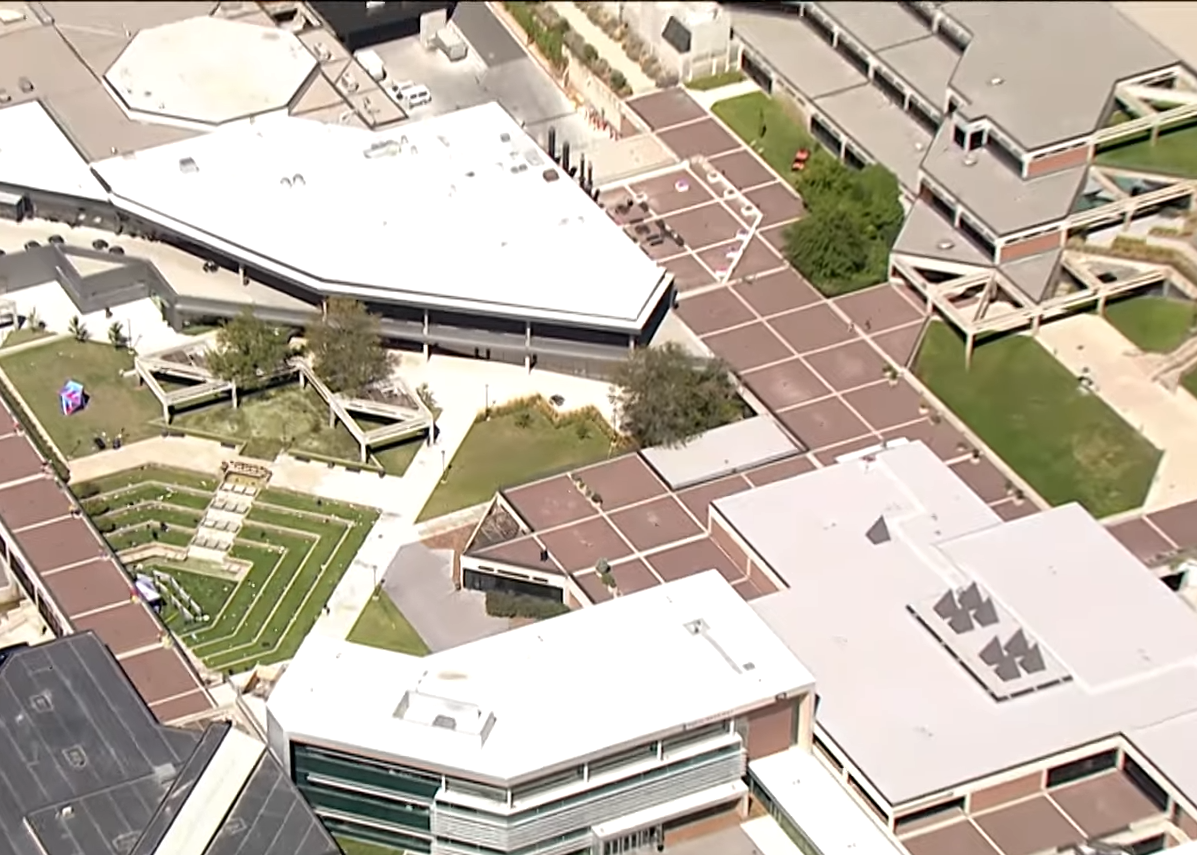
Aerial view of a university campus: a terraced courtyard with white event canopies, lawns, and walkways between large flat-roofed buildings.

plate III · aerial news video frame — duotone applied in display; original unmodified

Aerial view of the Utah Valley University courtyard and surrounding buildings on September 11, 2025, the day after the shooting, from KSL News helicopter footage; event canopies still stand in the courtyard that records show was excavated and paved within days.

KSL News Utah · 2025-09-11 · source · CC BY 3.0

The pressure file

Here the discipline of this site does its heaviest lifting. A motive environment is not an attribution. Nothing in the public record connects any donor, organization, or state to the killing operationallyC015 — no communications, no payments, no logistics, no forensic link; even the publication that broke the authenticated texts states that plainly. The pressure was real. The bridge does not exist in public evidence. Both halves of that sentence are findings, and this site will keep displaying them together.

▸ claims behind this paragraph (1)

The alternative mechanism

The most technically ambitious challenge to the official account holds that a device at Kirk's microphone, not a distant rifle shot, caused the fatal injuryC018. Its proponents point to frame-by-frame video interpretation — shirt deformation, a violently displaced necklace, an apparent gas puff before mechanical movement — and one anonymous analyst has published energy estimates, code, and source video inviting anyone to re-run the computation. Against it stands nearly everything else in the record: the gunshot classification, the recovered fragments, the rooftop chain, and the absence of any published residue or device-fragment finding. Even the theory's originator has lately entertained a variant in which a bullet did arrive — at the microphone.

▸ claims behind this paragraph (1)

This site grades the hypothesis weakly supported and does not expect that grade to be the last word, because the theory is unusually testable: a blind, native-file synchronization study ordering shot, deformation, and wound frame-accurately; laboratory examination of the microphone hardware and clothing; the full autopsy package. Every one of those tests appears in the research agenda. A theory that stakes itself on checkable physics deserves the check — that is the difference between examining an idea and either laundering or burying it.

Institutions, narratives, and the timeline wars

Officials have not earned unlimited deference here, and that is now a matter of record rather than suspicion: a judge held a deputy prosecutor in civil contempt in June 2026 for violating pretrial-publicity restrictionsC016 after he told a tabloid the state had "ample evidence" of guilt — even as the same ruling found his correction of ballistics misreporting legitimate. Narrative management inside the prosecution was real. So was actual misinformation for it to manage. Both facts are in the file.

▸ claims behind this paragraph (1)

The popular counter-narratives fare no better under inspection. The widely circulated timeline case — an unauthenticated 8:07 a.m. video supposedly at odds with an 8:29 arrival, a rooftop flight supposedly too fast for rifle disassembly — collapses on contact with its own premises: the anomalies are not, on current evidence, inconsistent with the official chronologyC010, and the disassembly claim appears nowhere in the reviewed official record. The related charge that the FBI director's announced screwdriver-DNA evidence was quietly abandonedC032 splits cleanly under verification: the announcement-versus-charging-document mismatch is real, and the abandonment is false — the evidence was presented under oath ten months later. This case keeps such material where it belongs: as leads in the catalog — the venue-selection allegation, the disputed accounts of who ordered cameras removed, an assertion that the FBI holds the original cards, a lead about a commentator's whereabouts that its own source says is unconfirmed — each anchored to its exact quote, each awaiting the specific verification it names, none promoted to fact.

▸ claims behind this paragraph (2)
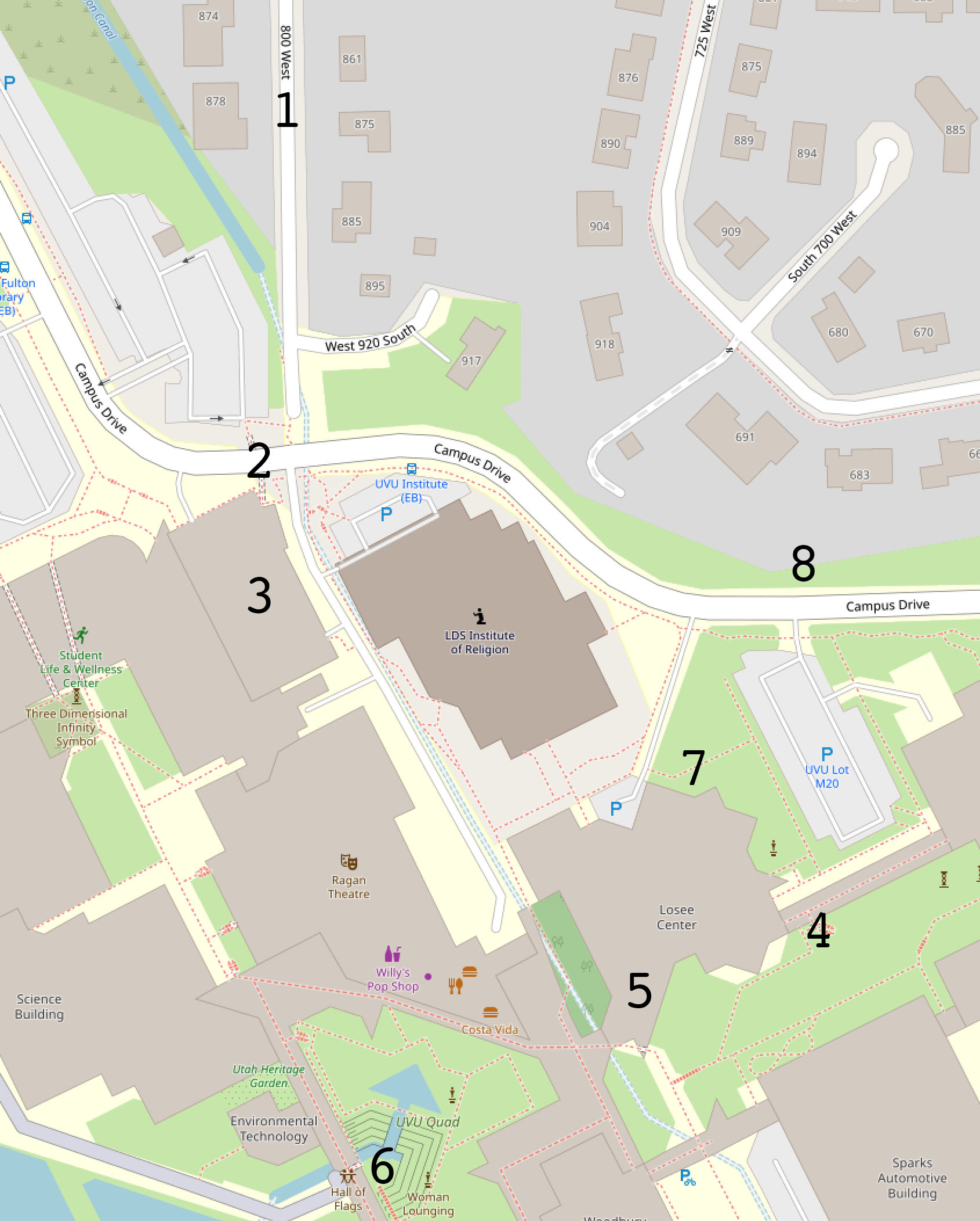
Campus map with building footprints and street names, the Losee Center and UVU Quad labeled, and eight numbered markers placed at points across the campus.

plate IV · annotated map — duotone applied in display; original unmodified

OpenStreetMap rendering of the Utah Valley University campus with the Losee Center and UVU Quad labeled. The eight numbered markers were added by a Wikimedia contributor to trace locations from the publicly reported movement chronology; they are an orientation aid, not an official exhibit.

OpenStreetMap contributors; markers added by Robert.Allen · 2025-09-16 · source · CC BY-SA 2.0

The organized-operation file

The strongest compilation of the broader-plot case circulating publicly assembles a procurement record, a flight, and a disaster into a single arc — and it is exactly the material this site's method exists to take apart carefully, because parts of it are real. The federal contract is real: award N0016425PJ538, "miniaturized-XS demolition charges, anti personnel-XS," $440,494, delivered by August 25, 2025, is verbatim in the federal procurement recordC025, and a live search replicates the claim that it is the only such-worded award in the database. The disaster is real: the manufacturer's Tennessee facility exploded on October 10, 2025, killing sixteen. What verification does not find is the connective tissue — the flight from Heber City has no source beyond assertion, the federal investigation attributes the day's production to commercial cast boosters with the cause formally open, state inspectors documented safety failures severe enough for their largest-ever penalty, and archive forensics shows the device theory was public on September 20, not "two days before" the blast, deflating the reactive-destruction reading while confirming the humbler fact that the theory came first. Real record, real catastrophe, no established bridge — and a research entry (KRK-R012) that names the exact papers that would build or demolish one.

▸ claims behind this paragraph (1)

The same discipline sorts the aftermath allegations into three piles. Documented: surrender-related surveillance footage was allowed to auto-delete unpreserved after thirty daysC026, in the sheriff's office's own records responses; and the former counterterrorism-center director states on the record that his foreign-nexus inquiry was halted, attributing the order to the FBI directorC027 — an assertion by its source, with the FBI's stated rationale (witness exposure at trial) carried alongside it. Open: whether a bystander's instant false confession was pre-arrangedC028 — his diversion intent is court record in his own words; any arrangement behind it is, so far, evidenced by nothing. Corrected: the "sealed black box" framing fails on inspection — cameras have repeatedly been allowed over defense objection, in-person appearances have occurred, and much of the sealing is defense-driven; what is real is the publicity order a prosecutor was held in contempt under, already graded above.

▸ claims behind this paragraph (3)

At the bottom of the ladder sit the leads that currently rest on nothing checkable — an aircraft whose passenger claims have no source at all, a device count from a pseudonymous account citing an anonymous tipster, a secondhand report of Kirk's private fear — kept in the catalog with their provenance stated plainly, because the honest way to handle a lead is neither to publish it as fact nor to pretend it was never raised.

What would settle it

A preliminary-hearing judge will hear probable-cause arguments on September 1, 2026, and the record will move. But the disputes this case tracks will be settled by disclosures and tests, not rulings: reconcile the seven fragments; release the autopsy package to independent pathologists; publish the media ledger with hashes; run the blind synchronization study; re-examine the ballistics blind with modern metrology; evaluate the DNA at the activity level; drive the 8:07 route with a stopwatch. Every one is specified in the research agenda with what it would prove and disprove. The honest summary of this case today fits in two sentences. The state has assembled a substantial, multi-channel account that no public evidence refutes. The public record is not yet complete enough for anyone — including the state's defenders — to audit that account independently, and until it is, this page will say exactly which pieces are missing.

the argument ladder

evidence for a lower rung does not automatically climb

Observation

What is actually there? Measurements, records, and anomalies.

Evidence highlights

The strongest records on each side, structurally symmetric. Every record separates what the source states from what we infer.

strongest supporting

Supports· strongKRK-E001

Washington Post visual-forensics video shows a person running on the roof seconds after the shot

what the source states
Headline and subhead (published 2025-09-11): "Video shows person running on roof immediately after Kirk shooting"; "A video enhanced by The Washington Post shows a person running across a roof overlooking the courtyard where Charlie Kirk was fatally shot seconds earlier."
what we infer
Independent of law-enforcement characterization, which is what gives it weight here.
limitations
  • Only the headline, subhead, and metadata could be verified; the article body was inaccessible to this case file's verification pass.
Jonathan Baran (2025)AI-verified citationKRK-C001
Supports· strongKRK-E002

FBI: rooftop escape video, rifle and ammunition in wooded area, trace evidence on the roof

what the source states
"The FBI is releasing a video of the shooter in the Utah Valley shooting. The subject is seen jumping from the rooftop of a building after the shooting." "He left a gun and ammunition in a wooded area near the university." "Trace evidence collected from the rooftop scene included shoe impressions, a forearm imprint, and a palm print."
what we infer
The FBI's public record independently corroborates a rooftop actor and places the rifle's recovery along the escape route.
limitations
  • Not independent of the investigation itself; 'the shooter' is the agency's characterization.
Supports· strongKRK-E003

Officer Bagley's sworn testimony: rifle sound, line of sight, screwdriver, prone-position gravel disturbance, escape footage

what the source states
Day-1 live log: Bagley "testified to hearing a shot at 12:23 p.m."; realized "the gunshot he heard was a rifle sound"; "looked across to the roof of the Losee Center, noting that it had a direct line of shot"; found "a red and black screwdriver" and a gravel disturbance that "looked like someone had lain there in the prone position"; dispatch "found footage of a man running toward the edge and lying down in the prone position," then "dropping off the northeast side of the building, where he later found a shoe imprint."
what we infer
Sworn testimony converges with the video evidence on the rooftop actor's existence and position.
limitations
  • On cross-examination Bagley said he could not identify the person on the roof or what he was holding from the footage; his body camera died while he was on the roof.

strongest undermining

Undermines· strongKRK-E008

The same record shows the rifle was not excluded either

what the source states
Day-4 live log, 2:36 p.m.: "The report says the fragments cannot be excluded as having been shot from the gun found in the woods."
what we infer
Together with KRK-E007 this contradicts BOTH popular misreadings: no public conclusive identification exists (undermining KRK-C003 as stated), and no exclusion exists either.
East Idaho News (2026)AI-verified citationKRK-C003
Undermines· strongKRK-E054

The screwdriver evidence was presented in full at the preliminary hearing

what the source states
July 2026 hearing coverage: "Faumuina testified that her team recovered a screwdriver from the campus' Losee Center rooftop... Faumuina testified that both the towel and the screwdriver had DNA consistent with the same two males — Robinson and Twiggs." FBI analyst testimony: "Robinson's DNA was found on a screwdriver recovered from the rooftop... DNA of Robinson's former roommate and lover Lance Twiggs was also found on both items, but Bakker said his sample was used as an elimination sample. Twiggs isn't accused or charged of any crime."
what we infer
The "quietly abandoned" reading fails: the evidence was presented under oath ten months after the announcement. What remains true is that early televised statements and formal filings did not reconcile — a statement-ledger entry (KRK-R010), not a vanishing act.
limitations
  • Same-proceeding press coverage; the underlying laboratory reports are not public.
Fox News (2026)AI-verified citationKRK-C032
Undermines· moderateKRK-E024

The same reporting: no evidence links the charged suspect to Israel; participants characterize the texts as venting

what the source states
"No evidence has been shared linking the only suspect to be charged with Kirk's murder to Israel." Hammer: Kirk "was blowing off steam in a private group chat setting"; Kolvet: the texts were "consistent with public frustrations he voiced many times." Kolvet also "stated that he had turned over the texts about 'Jewish donors' to the FBI in the wake of the shooting," saying "We wanted to leave nothing unturned."
what we infer
The publication most invested in this cluster records the absence of any operational bridge — and that the material was given to investigators rather than suppressed.
limitations
  • Absence of shared evidence is not proof of absence; investigative lead files are not public.

The best conventional explanation

steelmanned — the account the featured hypothesis must beat

The state's single-shooter model: Robinson planned the attack, fired the fatal round from the Losee Center roof, and fled alone; the rifle, DNA, digital messages, and alleged admissions cohere with that account, and its unresolved edges are the ordinary noise of a live prosecution — fragments retained at different custodians, an inconclusive comparison on damaged projectile metal (the modal outcome for such evidence), a contractor grabbing his own cards in a panic, a university paving a courtyard to reopen a campus, and a prosecutor who talked too much. On this account every "gap" has a mundane explanation, and none of the alternative hypotheses has produced a single authenticated forensic artifact — no residue, no device fragment, no excluded bullet — that the official mechanism cannot absorb. Its main unpaid debt is auditability: it asks the public to wait for trial rather than showing the complete chains now, and "trust the process" is precisely the posture this case exists to replace with records.

Research agenda

The case does not end in a verdict; it ends in the studies that would move it. Curated from the public request for proposals. The program funds tests in either direction.

KRK-R001Prize or grant · Desk

Fragment-by-fragment reconciliation of the autopsy projectile evidence

Obtain (by records request or court access) the medical examiner's evidence-recovery inventory and every transfer record, and produce a matrix identifying each of the seven photographed fragments: recovery location, initial custodian, package number, laboratory recipient, tests performed, and present disposition — reconciling the four examined by ATF. A complete answer eliminates the strongest legitimate chain-of-custody question in the public record; an incomplete answer localizes exactly what is missing.

expected information gain

High in both directions: a routine explanation closes the case's most concrete custody question; an unexplainable gap would upgrade it from anomaly to defect.

would update:KRK-C005KRK-C019
KRK-R002Prize or grant · Desk

Independent forensic-pathology review of the complete autopsy package

Seek release (court access, redacted narrative if photographs are protected) of the autopsy report, wound-track measurements, fragment map, radiology, and clothing examination, and commission review by an independent forensic pathologist experienced in rifle wounds — blinded to the competing internet theories — to state what mechanisms the documented injuries do and do not permit.

expected information gain

Directly tests the device hypothesis against primary medical evidence and converts the summarized gunshot classification into an auditable finding — the single highest-leverage disclosure in the case.

KRK-R003Prize or grant · Lab

Blind native-media synchronization study

Ingest every available native recording (UVU surveillance, event cameras, press and attendee video, audio tracks) into a qualified forensic video/audio laboratory; verify clock offsets, characterize dropped frames and rolling shutter; and produce a frame-accurate ordering of acoustic event, clothing motion, neck motion, necklace and object motion, and rooftop movement. Analysts blinded to which hypothesis is under test.

expected information gain

The device hypothesis's sequencing argument lives or dies here; the same study authenticates or dissolves the publicized timeline anomalies. Compressed social-media copies cannot answer any of it.

KRK-R004Prize or grant · Lab

Independent blind ballistics re-examination with 3-D metrology

Provide qualified independent examiners with anonymized fragments and test-fired comparison material — without identifying the prosecution weapon — using comparison microscopy plus objective 3-D surface topography, reporting identification, exclusion, or inconclusive without forced binary outcomes, in line with the published scientific framework for firearm/toolmark examination.

expected information gain

Any non-inconclusive result moves the case's central mechanism claim; a replicated inconclusive result would itself calibrate how much the public should expect from damaged-fragment comparisons.

would update:KRK-C003KRK-C004
KRK-R005Prize or grant · Desk

Activity-level DNA evaluation

Independent review of the raw electropherograms, mixture interpretation, and laboratory controls behind the reported DNA associations, followed by an activity-level evaluation: what handling, transfer, and deposition scenarios are consistent with the observed profiles, and with what relative support.

expected information gain

Separates "whose DNA" from "deposited how and when" — the exact distinction the preliminary-hearing record left open and the one that matters for both the state's account and its alternatives.

would update:KRK-C008
KRK-R006Prize or grant · Field

Authentication and route reconstruction for the 8:07 video

Obtain the original 8:07 a.m. recording with native metadata; verify the camera's clock error; geolocate the frame; attempt identification; establish the vehicle's position at that time; and drive the route to the 8:29 campus observation under comparable conditions. The output is binary: compatible or incompatible with the official chronology.

expected information gain

Converts the most-circulated timeline anomaly from rhetoric into a measurement, in whichever direction the measurement falls.

would update:KRK-C010
KRK-R007Prize or grant · Desk

GRAMA records: scene release and paving authorization chain

Utah open-records requests to UVU, UVU Police, and DPS/SBI for the September 10–17, 2025 incident-command and facilities records: scene-release forms, cleanup requests, work orders, contractor communications, before/after photographs, and any instructions restricting areas facilities staff could disturb.

expected information gain

Replaces the paving dispute's inference-from-silence (in both directions) with the actual authorization chain.

would update:KRK-C013KRK-C017
KRK-R008Prize or grant · Desk

Event-media ledger: original cards, hashes, and acquisition logs

Compile a carrier-by-carrier ledger of the event's recording media: each original card's make, serial, and camera association; forensic images and hashes at first law-enforcement acquisition; the flash drive's filesystem timestamps; cloud-transfer audit logs; and the creation metadata of the excerpt clip discussed at the preliminary hearing. Sought via court access, discovery materials that become public, or voluntary disclosure.

expected information gain

A complete ledger collapses footage-manipulation variants at a stroke; a demonstrably incomplete one upgrades the custody question. Either way the intent question around the card removal gets its evidence.

KRK-R009Prize or grant · Lab

Native multi-channel acoustic analysis

Obtain native audio (stage PA, wireless microphone system, press and attendee recordings), survey original microphone positions, and have a forensic acoustician test for separable projectile-shockwave and muzzle-blast signatures and time-difference-of-arrival localization of the acoustic source.

expected information gain

Independently localizes the shot's origin without trusting any party's scene narrative — evidence that bears simultaneously on the rooftop mechanism and on the eyewitness-proximity puzzle the device hypothesis leans on.

would update:KRK-C001KRK-C018
KRK-R011Prize or grant · Desk

Base-rate study: scene-release-to-alteration intervals in comparable cases

This study has now been carried out at fifteen venues: the resulting table places the UVU courtyard alteration (cleanup order September 11; pavers September 14; lead investigator testifying he did not authorize) as unremarkable on speed — comparable scenes were altered as fast or faster under owner authorization no investigator disputed — but unmatched in the table on sequence and authority, being the only case with a disputed authorization on the record and the only fast alteration whose formal release date is absent from public reporting. What remains is to extend the population beyond fifteen venues and to source the seven rows whose formal release dates public reporting does not record. The discriminating variables are sequence (release before alteration?) and authority (who ordered it?), not speed alone.

expected information gain

Converts the paving dispute's central intuition — "nobody alters a scene that fast" — into a measured base rate. If the UVU sequence is an outlier (especially if alteration preceded formal release), the concealment question gains real, citable weight; if it is typical of released public venues, the anomaly deflates honestly. Either outcome publishes, per the negative-evidence rule.

would update:KRK-C013KRK-C017
KRK-R012Prize or grant · Desk

AES-cluster verification package

Complete the verification of the procurement/explosion cluster (KRK-C025) at the primary level: FAA/FOIA requests or subscription flight-data pulls identifying the reported August 25, 2025 Heber City → John Tune aircraft, operator, and (where lawful) manifest; a records request or program-office inquiry resolving what "SPM" in award N0016425PJ538 denotes and the deliverables' disposition; a replication of the USAspending uniqueness search including IDVs and subawards; and tracking of the CSB final report and TOSHA case outcomes for any cause finding.

expected information gain

Every element is checkable paper: either the cluster's connective tissue materializes (which would transform the case) or the cluster resolves into a real contract, a real disaster, and an unsourced flight — closing the loudest new allegation either way.

would update:KRK-C025
KRK-R010Prize or grant · Desk

Statement-discrepancy ledger for post-event public accounts

Build a claim-by-claim archive of post-event public statements by event personnel and officials (media transfers, first-call accounts, medical relays, venue-selection accounts), each entry carrying the original artifact, the contradicting record if any, and a five-way outcome: accurate / mistaken / materially misleading / knowingly false / unresolved. Publish the ledger as it fills.

expected information gain

Prevents both failure modes at once: discrepancies cannot be laundered into a coordinated-lies narrative, and they cannot be waved away as grief — each lands where its evidence puts it.

KRK-R013Prize or grant · Desk

Base-rate study: federal public-facing role in state-jurisdiction public-venue homicides

Over the same comparable-case population as KRK-R011 (mass-casualty events and killings of public figures at public venues, US, 2000-2026, state-jurisdiction prosecutions), tabulate for each case: whether the FBI participated in the investigation; the depth of that role (laboratory/evidence-response assistance, joint task force, investigative lead); the date and rank of the first federal public statement (local sheriff or DA only, special agent in charge, FBI director personally); and the stated legal nexus for involvement. Then place this case's profile — director-level scene walkthrough and evidence announcements within 48 hours, "lead out for the federal government," no federal charge identified — against that distribution. The discriminating variable is who fronted the case publicly and how fast, NOT participation itself: the DOJ's former domestic-terrorism counsel states on the record that FBI assistance in state-charged cases is routine.

expected information gain

Converts a circulating "the federal presence was unusual" intuition into a measured base rate, with the deflationary hypothesis (routine assistance, unusual only in visibility because the victim was prominent) and the inflationary one (public fronting without jurisdiction is rare) both testable on the same table. If director-level fronting is unprecedented among comparables, the institutional-conduct questions in this case gain citable weight; if it tracks victim prominence, the anomaly deflates honestly. Either outcome publishes.
would update:KRK-C037

Change history

Trust comes partly from showing changed minds. Erebus records what changed, why, and who — including the AI's role.

  1. Erebus editorial AI (Claude Fable 5, Cursor cloud agent) · AI-assisted

    Study KRK-S003 supersedes KRK-S001: the frozen protocol's third searcher completed after publication and surfaced one candidate the published table had missed — Emanuel AME Church (bullet-scarred wall panels cut out by day three, services on day four, church-authorized). Per the append-only rule the published rows were never edited; the successor carries the full table plus the new row, the findings are refined accordingly, and the ledger's two evidence records re-point to the superseding workpaper.

    Why: Coverage correction under the supersession mechanism; the discovery and its native verification are recorded on the KRK-S001 collection PR.

  2. anthropic/claude-opus-5 (scheduled maintenance run, erebus-editorial-audit-v1); publishes only through the constitutional gate's multi-model concurrence, per AGENTS.md §3.15 · AI-assisted

    Updated the research agenda item proposing a base-rate study of scene-release-to-alteration intervals (KRK-R011) to record that the study has since been carried out across fifteen comparable venues, with the UVU courtyard found unremarkable on speed but unmatched on authorization sequence. The item now describes the remaining work — extending the population and sourcing the rows whose formal scene-release dates public reporting does not record. No changes were needed to the overview article.

    Why: The agenda proposed as future work a study the evidence records now report as completed, which would have misled readers about what this case still needs.

  3. Erebus editorial AI (Claude Fable 5, Cursor cloud agent) · AI-assisted

    Study KRK-S001 collected: fifteen comparable venues tabulated under the criteria frozen this morning (hash-verified unchanged), with two aggregate findings entering the ledger (KRK-E057, KRK-E058) via the study's workpaper source. On speed alone the UVU alteration is not an outlier; on sequence and authority it is unmatched in the table.

    Why: Collection phase of the site's first pre-registered study, per the two-PR discipline; executes KRK-R011.

  4. Erebus editorial AI (Claude Fable 5, Cursor cloud agent) · AI-assisted

    Added catalog claim KRK-C037 (whether the FBI's director-level public role in a state-jurisdiction homicide exceeded its typical role in comparable cases), its source record (the FBI director's September 12, 2025 remarks, archive-verified), and research item KRK-R013 naming the pre-registered base-rate study that can grade it.

    Why: Founder-raised circulating claim, 2026-08-26. Decomposed per the method: the observable half is anchored to the director's own words; the comparative half enters ungraded with its truth condition tied to the KRK-R013 study, alongside the on-record deflationary reading.

  5. Erebus editorial AI (Claude Fable 5, Cursor cloud agent) · AI-assisted

    Case retitled to name its subject directly rather than its conclusion. The previous titles were evocative but each asserted the case's own finding in the most prominent position on the page, before a reader reached any graded claim or source — a conclusion presented without the evidence, label, or uncertainty that every other assertion on the site has to carry. The clearest instance was this site's first case, whose title asserted the single-shot mechanism that the case exists to grade and does not grade as established. Titles now name the event; subtitles continue to carry the specific question, and findings stay where they belong — in claims that are graded, sourced, and revisable.

    Why: Founder direction, 2026-08-26. Applied to all three cases together rather than only the new ones, since leaving one conclusion-asserting title would be incoherent.

  6. Erebus editorial AI (Claude Fable 5, Cursor cloud agent) · AI-assisted

    Wave-3 intake completing the compilation triage: featured claim KRK-C032 (the screwdriver "abandonment" claim — premise verified, abandonment contradicted by hearing testimony), catalog leads KRK-C033–C036 (Google Trends searches; the "they're going to kill me" messages; the rejected-invitation and funding-call allegations — each anchored with its on-record counter-assertions stated), evidence records KRK-E053–E056 (the Patel announcement; the hearing presentation of the screwdriver DNA; AES's archived capability pages; the Information's zero screwdriver mentions, verified against the primary filing), and seven sources. Independence groups mark the Grayzone anonymous-friend accounts and Owens final-days accounts as non-independent clusters. Amended same day: KRK-C032 reworded to a single proposition and the dual-document evidence record split so the primary filing carries its own observation — construction defects raised in pre-merge code review of this change's pull request. (This describes review of the change itself; the case's ASSESSMENT remains an unratified AI draft — no cross-model check runs exist yet.)

    Why: Remaining 'verify' items from the whokilledck triage ledger, each checked at primary or archived sources; assertion-versus-denial pairs recorded symmetrically per §3.11.

  7. Erebus editorial AI (Claude Fable 5, Cursor cloud agent) · AI-assisted

    Wave-2 intake from the founder-supplied whokilledck.com compilation: all ~45 items triaged (ledger in casework/kirk/); four new featured claims (the AES procurement/explosion connection KRK-C025, the unpreserved surrender video KRK-C026, the Kent halt statement KRK-C027, the Zinn pre-arrangement question KRK-C028), three new catalog leads (KRK-C029–C031), thirteen evidence records (KRK-E038–E050), sixteen sources, and research entry KRK-R012. Key verification outcomes recorded in both directions: the federal procurement record and facility explosion verified against primary records; the theory-origin timeline corrected by archive forensics (public September 20, not October 3–8); the camera-ban and video-only-appearance assertions contradicted by the court record; the aircraft-passenger and Israeli-devices assertions found to be sourceless or pseudonymous-only. One compilation cluster excluded under the living-persons rules (photo-interpretation insinuations about a named private individual).

    Why: Founder directed that everything raised in the compilation be addressed; each item was verified at primary sources before entry, or recorded as an honestly-labeled lead where no primary source exists.

  8. Erebus editorial AI (Claude Fable 5, Cursor cloud agent) · AI-assisted

    Case launched: 19 featured claims, evidence ledger and source registry built from independently verified citations, research agenda of eleven decisive tests, and overview article. Constructed from the founder's research brief (casework/kirk/) with every citation re-verified against the live primary source before entry; the brief itself is not cited anywhere, per casework policy. All records carry ai_extracted provenance; nothing has been human-reviewed yet, and no assessment has been ratified.

    Why: First case on the site; chosen by the founder as the pilot for handling unofficial and contested sources under the living-persons rules.

living persons · corrections

Cases on this site may concern real, living, named people. Every person accused in any proceeding touched by this case is presumed innocent unless and until proved guilty in a court of law. This site grades evidence disputes — timelines, forensics, authenticity, chain of custody — never anyone's guilt, and assertions by prosecution, defense, or officials are labeled as assertions by their source.

To request a correction or the removal of material about you or someone you represent, open an issue on this site's repository or contact the founder directly. Such requests are processed before any other maintenance work.