Taken as a whole, the case file supports the conventional account that al‑Qaeda carried out the September 11 attacks, that the Twin Towers collapsed from impact damage, dislodged fireproofing, and prolonged fires, and that World Trade Center 7’s collapse was fire‑driven rather than a covert demolition. However, the file also documents specific, nontrivial gaps and auditability defects around WTC 7, dust chemistry, and pre‑attack financial trading that prevent a fully “closed” verdict.
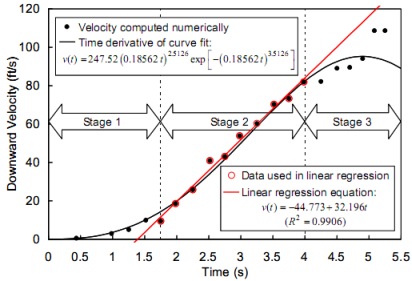
At the observational rung, the record is exceptionally strong. Independent official studies and contemporaneous documentation firmly establish that WTC 7, a 47‑story steel‑framed building not struck by an aircraft, burned unfought for about seven hours and then suffered total collapse, with its north face exhibiting a ~2.25 s free‑fall interval. These are not challenger discoveries; they are NIST’s own findings (SEP‑C001, SEP‑C002). Witness reports of loud “explosion‑like” sounds around WTC 7 are also well attested, but acoustically weak: many non‑explosive mechanisms plausibly produce such sounds (SEP‑C008).
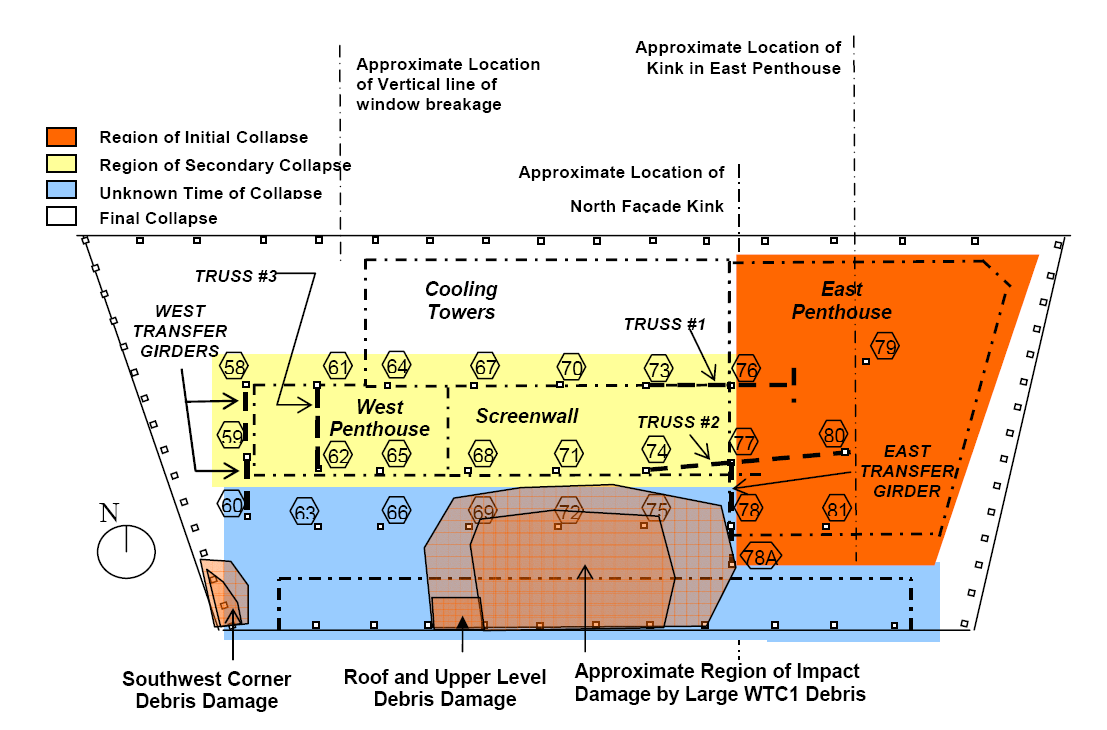
For WTC 7’s mechanism, NIST’s thermal‑expansion / Column 79 sequence (SEP‑C003) is internally coherent and consistent with low‑temperature steel behavior, and gains indirect plausibility from later fire‑induced total collapse of the Plasco building in Tehran. Yet it rests on finite‑element models whose core data (tens of thousands of files) were deliberately withheld on security grounds, a decision upheld in court (SEP‑C005). That means no independent team can recompute the sequence. The main published challenger study from UAF (SEP‑C004) released all its own data, but is advocacy‑funded, un‑peer‑reviewed, relies on a static temperature field instead of realistic fire progression, and appears to impose near‑simultaneous column failure as a modeling input. Both sides thus rest on non‑reproduced simulations with significant methodological limitations. In that context, NIST’s specific demolition‑charge scenario is strongly contradicted by its own acoustic analysis and the absence of any blast‑level signature on recordings (SEP‑C009), but a more general incendiary or unconventional demolition claim remains only weakly testable because WTC 7 steel was not identified and preserved (SEP‑C006) and no targeted residue testing was possible. The documented but unexplained high‑temperature sulfidation on two opportunistically recovered members (SEP‑C007) is a real anomaly whose source was never studied, leaving a small but persistent uncertainty.
For the Twin Towers, the physical and documentary record strongly supports NIST’s impact / fireproofing / fire initiation mechanism (SEP‑C011). The collapses initiate at the impact‑damaged and heavily burned floors; this timing is extremely hard to reconcile with any plausible pre‑planted explosive arrangement (SEP‑C013). Seismic records show no pre‑collapse explosive signals, and no demolition hardware or thermitic residues were recovered under controlled conditions. However, NIST itself states that it did not attempt an end‑to‑end numerical simulation of the total collapse progression, arguing instead from capacity margins that progression was “readily explained” without it (SEP‑C012). That leaves a methodological gap: existing mechanics papers suggest gravity suffices by large margins, but no open, high‑fidelity progressive‑collapse model exists that can be inspected and rerun.
The dust‑chemistry branch shows both sides over‑claiming. The nanothermite interpretation of red/gray chips (SEP‑C014) is strongly contradicted by an independent analysis that finds no elemental aluminum—fatal for a thermitic formulation—but that same study also concludes the chips are not the towers’ primer paint. Thus the chips’ actual identity remains unresolved, and both the “thermite” and “just paint” slogans outrun the data.
On pre‑attack trading, peer‑reviewed econometric work confirms that put options on affected airlines (and some related stocks) were statistically anomalous and consistent with informed trading (SEP‑C015). The 9/11 Commission’s explanation—that the largest positions were placed by an identified U.S. institutional investor with “no conceivable ties to al Qaeda” and that other suspect trades trace to a newsletter recommendation—is specific and facially plausible, but relies on non‑public interview notes and internal memoranda (SEP‑C016). Because those files remain classified, the explanation cannot be independently audited. That justifies a “weakly supported” assessment for a foreknowledge inference in either direction: the anomaly is real, and both sinister and benign stories sit atop an inaccessible core record.
The warnings and foreknowledge branch is clearer. Declassified PDBs, the Joint Inquiry, and inspectors‑general document extensive but fragmentary intelligence about al‑Qaeda, including the famous “Bin Ladin Determined To Strike in US” brief, multiple field reports, and missed chances to locate specific hijackers (SEP‑C018). These records converge on bureaucratic and analytical failure—missed watchlisting, poor information sharing, and inadequate synthesis—rather than on specific, suppressed knowledge of time, place, and method. Claims that U.S. officials had such precise advance knowledge and “allowed” the attacks (SEP‑C019) are therefore contradicted by the best available official self‑audits, though it remains true that some relevant materials (notably interrogation tapes and the Able Danger data) were destroyed. The Able Danger allegation that Atta was explicitly identified a year early (SEP‑C021) remains weakly supported and structurally unresolvable at present: the DoD inspector general finds the witnesses’ recollections mistaken and identifies a real 1999 chart without Atta, yet multiple officers insist under oath that they saw his name, and DoD’s decision to block their early testimony undermines confidence in transparent resolution.
The air‑defense record, anchored by NORAD/FAA tapes and the 9/11 Commission’s staff statement, shows that public timelines from FAA and DoD before 2004 were materially inaccurate, including misattribution of a fighter scramble to different hijacked flights (SEP‑C020). This is clear evidence of official misstatement, whether through confusion or retrospective narrative smoothing. Those same tapes, however, also show that fighters were launched against a phantom American 11 and never had a confirmed hijacked airliner in their sights before impact, which contradicts Flight 93 shootdown claims in the tombstoned set.
The Saudi‑assistance branch is substantively open but bounded. The declassified “28 pages” and subsequent releases show that at least two hijackers in California received practical help from individuals connected in some fashion to Saudi institutions (SEP‑C022), but the Joint Inquiry explicitly refrained from judging the reliability or sufficiency of these raw leads. The 9/11 Commission, in turn, found no evidence that the Saudi government as an institution or senior officials funded al‑Qaeda, while explicitly allowing that state‑linked charities may have been a conduit (SEP‑C023). A federal court has since held that civil claims alleging Saudi institutional support are legally sufficient to go to trial, but that ruling is jurisdictional, not a finding of fact, and is now on appeal. With heavily redacted FBI files and no merits judgment, the best warranted assessment is unresolved.
Documented official misconduct is real and central to calibration. The EPA inspector general establishes that early “air is safe” assurances near Ground Zero were issued without adequate data and were edited by the White House Council on Environmental Quality to remove cautions and add reassurance (SEP‑C024). The air‑defense timeline corrections show years of inaccurate public accounts. CIA destruction of interrogation tapes and DoD obstruction of Able Danger witnesses add to a pattern of institutional self‑protection. These episodes appropriately erode default deference to official statements. At the same time, they were exposed by other government oversight organs, and they concern health, liability, and reputational risk more than the core question of authorship or active complicity in the attacks.
Synthesizing across branches, the case is “mixed” because most core physical and historical questions—who attacked, how the towers fell, whether specific U.S. officials had exact foreknowledge—are resolved by robust, convergent evidence, while a smaller set of technically and politically sensitive issues—WTC 7 initiation detail, one dust anomaly, pre‑attack options tracing, possible Saudi institutional involvement, and the precise contents of a destroyed data‑mining corpus—remain underdetermined by the record made public so far. The research agenda correctly identifies that settling most of these gaps requires modest, well‑scoped work and declassification choices, not breakthroughs in physics.
run 2026-08-26-check-gpt-r2 · 2026-08-26 · not human reviewed — per-claim verdicts on each claim page